When Breathing Breaks Down at Night: The Sleep Apnea Factor Behind Sildenafil Treatment Resistance
For many men, the frustration of a sildenafil prescription that simply doesn't perform as expected leads to a familiar sequence: the dose gets adjusted, the timing gets refined, the lifestyle habits get scrutinized. Yet for a meaningful segment of the population, none of these modifications produce lasting improvement — because the real obstacle isn't pharmaceutical at all. It's happening while they sleep.
Obstructive sleep apnea (OSA) is among the most common and most underdiagnosed conditions in the United States, affecting an estimated 30 million Americans — the majority of whom have never received a formal diagnosis. For men being treated for erectile dysfunction with sildenafil, this silent disorder can operate as a persistent counterforce, quietly dismantling the physiological conditions the medication requires to work effectively.
What Sildenafil Actually Requires to Function
To understand why sleep apnea interferes with sildenafil, it helps to first understand the biological mechanism the drug relies on. Sildenafil works by inhibiting phosphodiesterase type 5 (PDE5), an enzyme that breaks down cyclic guanosine monophosphate (cGMP). When cGMP accumulates, smooth muscle in penile blood vessels relaxes, allowing increased blood flow in response to sexual stimulation.
This cascade depends on several conditions being met simultaneously: adequate nitric oxide (NO) production, healthy endothelial function, sufficient testosterone activity, and a nervous system that isn't chronically dysregulated. Sleep apnea compromises each of these conditions in measurable, clinically documented ways.
Oxygen Deprivation and Its Downstream Effects
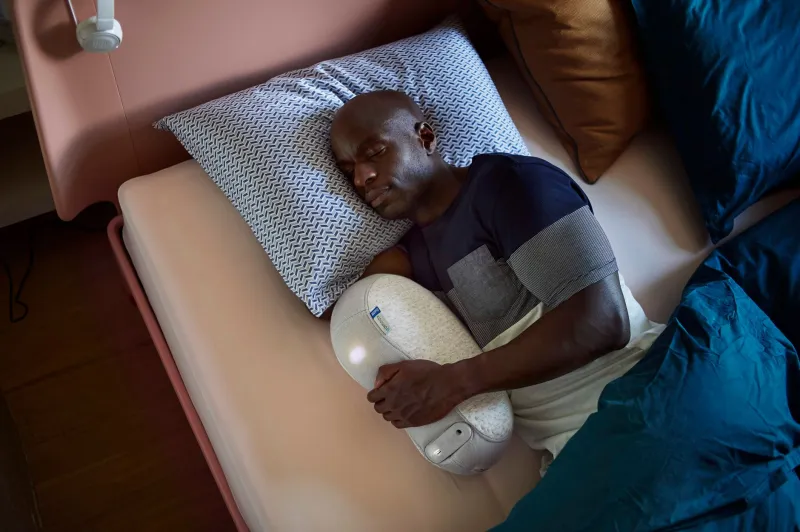
Obstructive sleep apnea is characterized by repeated episodes during which the airway collapses partially or completely during sleep, causing breathing to stop for seconds at a time — sometimes hundreds of times per night. Each episode triggers a drop in blood oxygen saturation, a brief arousal from sleep, and a surge of sympathetic nervous system activity.
The cumulative consequence of these nightly oxygen fluctuations is a state of intermittent hypoxia — a pattern of repeated oxygen deprivation that has been shown to damage endothelial cells, the very cells that line blood vessels and produce nitric oxide. Since nitric oxide is the initiating signal for the entire cGMP pathway that sildenafil amplifies, impaired NO production means the medication has a diminished signal to work with from the outset.
Research published in peer-reviewed journals has documented that men with moderate to severe OSA demonstrate significantly reduced endothelial-dependent vasodilation compared to men without the condition. In practical terms, sildenafil is attempting to enhance a biological process that has already been structurally compromised.
The Hormonal Dimension
Sleep apnea's interference doesn't end at the vascular level. Testosterone, which plays a supportive role in sexual function and contributes to the sensitivity of erectile tissue, is predominantly synthesized during deep, restorative sleep. Obstructive sleep apnea fragments sleep architecture, reducing the time spent in slow-wave and REM stages — precisely the phases during which testosterone production peaks.
Studies have found that men with untreated OSA tend to exhibit lower morning testosterone levels than their sleep-healthy counterparts, even after controlling for body weight and age. Low testosterone doesn't directly prevent sildenafil from functioning, but it reduces the responsiveness of penile tissue and dampens libido, both of which affect real-world treatment outcomes in ways that clinical trials conducted under controlled conditions may not fully capture.
Recognizing the Warning Signs
Because sleep apnea frequently goes unrecognized — many men are unaware they stop breathing during sleep unless a partner observes it — there are specific patterns worth discussing with a physician, particularly when sildenafil is underperforming.
Loud or irregular snoring is among the most common indicators of obstructive sleep apnea, though not all individuals with OSA snore audibly.
Excessive daytime fatigue that persists despite a full night in bed is a hallmark symptom. Men who find themselves drowsy during low-stimulation activities — reading, watching television, sitting in traffic — may be experiencing the restorative sleep deprivation that OSA causes.
Morning headaches result from the carbon dioxide accumulation and reduced oxygen delivery that occur during apneic episodes overnight.
Difficulty concentrating, mood disturbances, and irritability are also associated with chronic sleep fragmentation.
Nocturia, or waking repeatedly during the night to urinate, is a less commonly known but clinically recognized symptom of OSA, as pressure changes in the chest during obstructed breathing can stimulate hormones that signal the kidneys to produce more urine.
If several of these symptoms are present alongside sildenafil non-response, the case for sleep apnea evaluation becomes considerably stronger.
The Overlap With Metabolic Risk Factors
It is also worth noting that sleep apnea and erectile dysfunction share a number of the same underlying risk factors — obesity, type 2 diabetes, hypertension, and cardiovascular disease among them. This overlap means that the two conditions frequently co-occur not by coincidence, but because both are downstream consequences of the same metabolic disruption.
For men in this category, treating sildenafil resistance without addressing sleep apnea is analogous to repainting a car without repairing the engine. The surface-level intervention may produce temporary improvements, but the structural problem continues to generate the same outcome.
What Treating Sleep Apnea Can Do for Sildenafil Response
Clinical evidence offers meaningful encouragement here. Several studies have examined the effect of continuous positive airway pressure (CPAP) therapy — the standard first-line treatment for moderate to severe OSA — on erectile function in men with both conditions. The findings are broadly consistent: treating OSA with CPAP improves erectile function scores, and in some cases, this improvement is sufficient to restore sildenafil responsiveness in men who had previously not responded adequately.
CPAP works by maintaining steady positive air pressure through a mask worn during sleep, preventing airway collapse and eliminating the oxygen fluctuations that damage endothelial tissue. Over time, restored nighttime oxygenation supports endothelial recovery, hormonal normalization, and a reduction in sympathetic nervous system hyperactivity — all of which create a more favorable environment for sildenafil to act within.
Steps to Take if You Suspect Sleep Apnea
A formal diagnosis of obstructive sleep apnea requires a sleep study, which can be conducted either in a sleep laboratory or, increasingly, via home sleep testing kits that your physician can prescribe. The process is less burdensome than many patients anticipate, and the diagnostic information it generates can reorient an entire treatment strategy.
If you are currently taking sildenafil and experiencing suboptimal results, raising the possibility of a sleep disorder with your prescribing physician is a clinically reasonable and evidence-supported step. A conversation that begins with "I may not be sleeping as well as I think" could ultimately prove more productive than any further dose adjustment.
The Broader Lesson
Sildenafil is a well-established, highly effective medication for erectile dysfunction — but it operates within a biological system, and that system must be reasonably functional for the medication to deliver its intended benefit. Sleep apnea represents one of the more significant and underappreciated ways that system can be compromised without the patient's awareness.
For any man whose sildenafil treatment has plateaued, stalled, or never fully delivered, the answer may not be a different pill. It may be a better night's sleep.